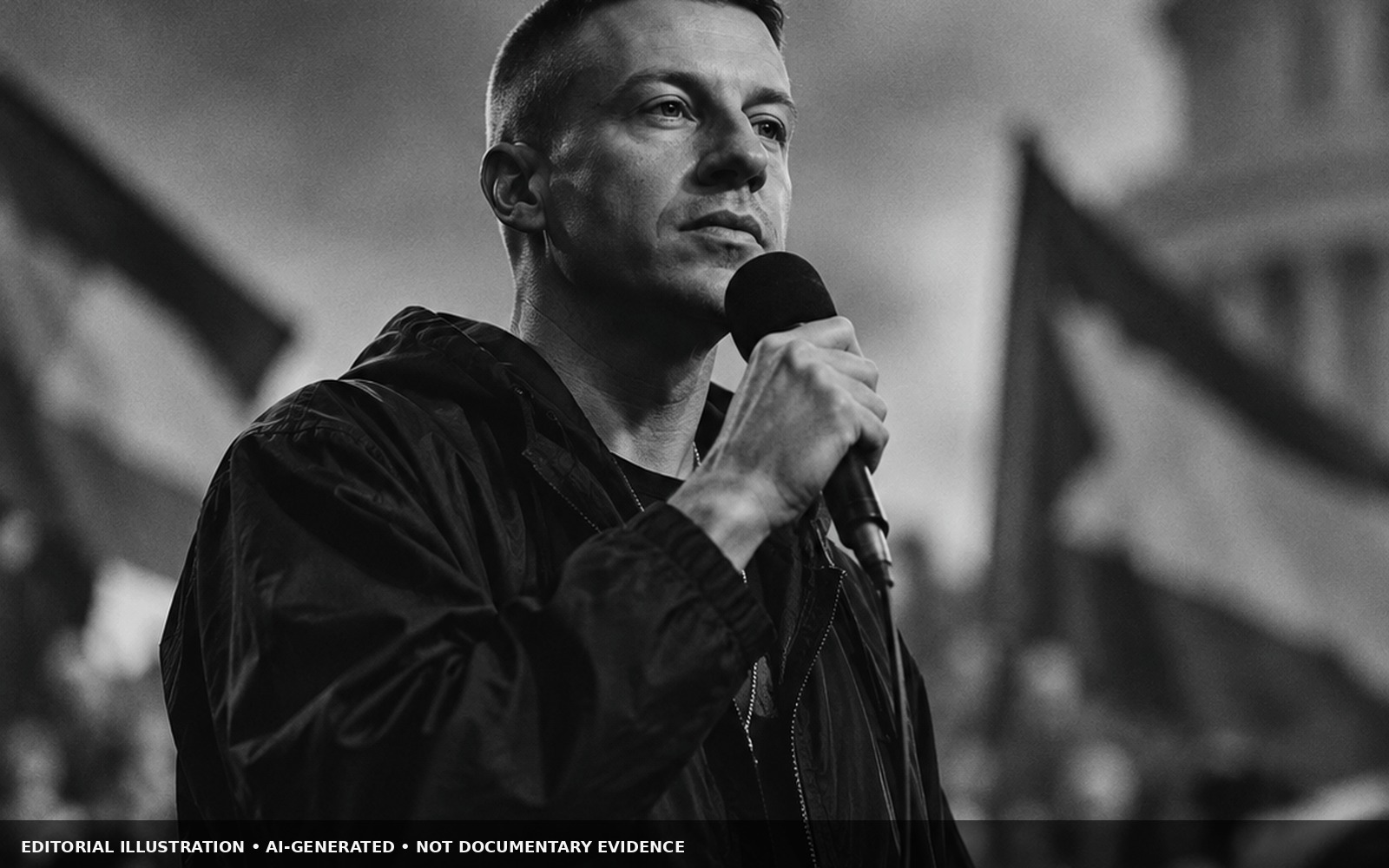
What Macklemore said
Macklemore’s first major public statement after October 7 contained two distinct messages. He condemned Hamas’s killing, kidnapping and bombing of Israelis as horrific, expressed sympathy for Israeli victims, and described the attack as an abomination.
He then turned to Israel’s response in Gaza, calling for a ceasefire and accusing the Israeli government of collective punishment, apartheid and an unfolding genocide.
Where the antisemitism dispute enters
The post anticipated the accusation directly. Macklemore argued that criticism of the Israeli government was not automatically antisemitic and said he could love Jewish people while condemning Israel’s actions.
The controversy therefore centered less on an explicit anti-Jewish statement and more on the broader argument about when anti-Israel rhetoric, genocide accusations and opposition to Zionism can cross into antisemitic demonization or delegitimization.
Why this matters in the broader record
This statement marked the beginning of a new phase. Unlike the 2014 costume controversy, the post-October 7 disputes were largely political and interpretive. They involved Israel, Zionism, genocide claims, protest movements and the boundaries of antisemitism definitions.
That distinction is important because Jewish organizations do not all use the same framework for Israel-related speech. The later Macklemore controversies repeatedly returned to that same contested boundary.