What happened
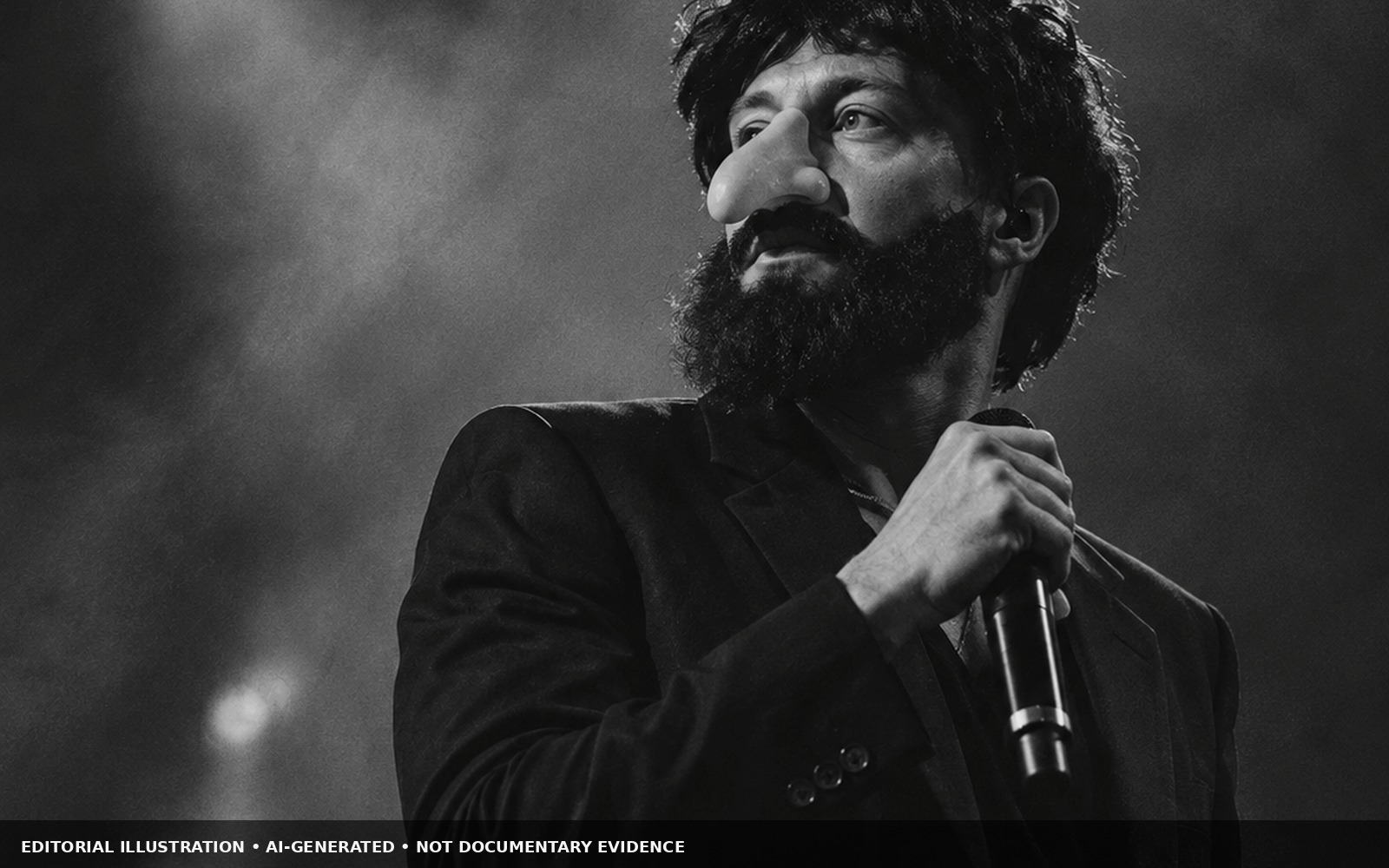
Macklemore made a surprise appearance at Seattle’s EMP Museum wearing a dark wig, dark facial hair and an oversized prosthetic nose. He performed “Thrift Shop” and “Can’t Hold Us.” Contemporary photographs and reporting established the appearance and quickly turned it into a national controversy.
The combination mattered because exaggerated noses, dark hair and beards have long appeared in anti-Jewish caricature. B’nai B’rith publicly criticized the costume, and Seth Rogen mocked the resemblance on social media.
Why critics said it was antisemitic
The criticism was not based only on the fake nose. Critics focused on the full visual package and the performance context. B’nai B’rith said the hooked-nose appearance, combined with a song associated with bargain shopping, propagated offensive stereotypes about Jews and money.
That made the 2014 incident different from many of Macklemore’s later controversies. Here, the argument was not primarily about Israel or Zionism. It was about imagery associated with a traditional anti-Jewish stereotype.
Macklemore’s response
Macklemore said the disguise was assembled so he could move through the venue without being recognized. He wrote that a Jewish stereotype had never crossed his mind, but he also acknowledged that the costume could be interpreted as a Jewish caricature and apologized.
ADL national director Abraham Foxman said the outfit reminded many people of an antisemitic caricature regardless of motive, while accepting Macklemore’s denial of ill intent and accepting his apology.
Why the incident remains relevant
The controversy has repeatedly resurfaced when later organizations and public figures have discussed Macklemore’s record. In 2026, Robert Kraft referred to what he described as a broader history of antisemitic rhetoric and imagery; the 2014 episode was widely understood as part of that background.
The central fact is straightforward: the imagery itself was widely criticized as antisemitic. The disputed question was Macklemore’s intention, which he denied.